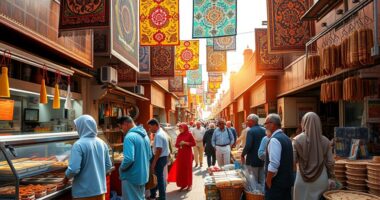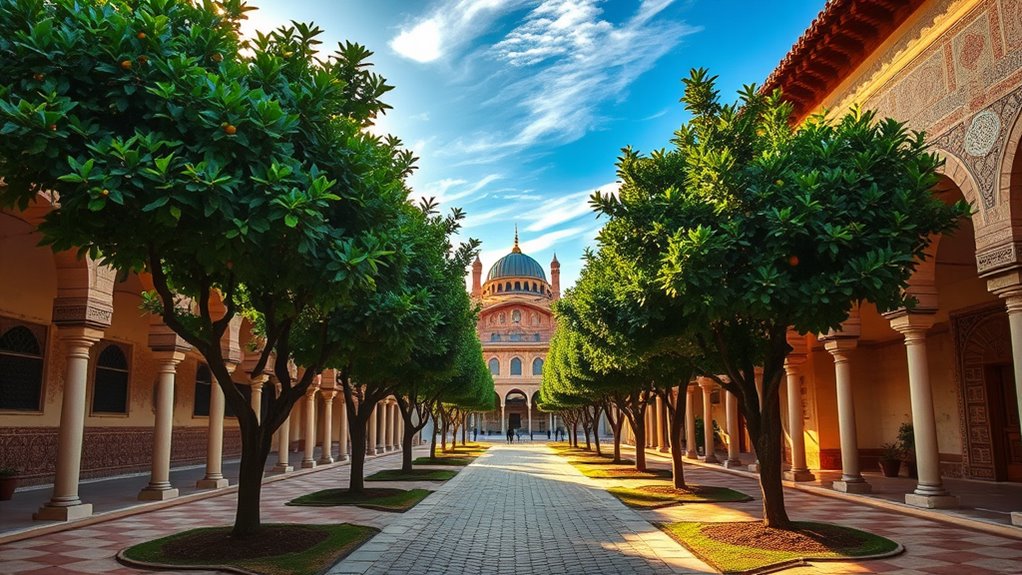

Islamic Spain boasts architectural wonders like the Great Mosque of Córdoba and the stunning Alhambra. You’ll marvel at the rhythmic arches and intricate mosaics that reflect centuries of cultural fusion. The lush gardens and tranquil water features invite serenity, while delicate stucco work showcases incredible craftsmanship. Each structure tells a story of unity and diversity, reminding us of a rich historical period. Keep exploring to uncover the beauty and complexity of this remarkable architectural legacy.
Key Takeaways
- The Great Mosque of Córdoba features stunning red and white striped arches, creating a unique rhythmic pattern that defines Moorish architecture.
- The Alhambra in Granada showcases exquisite stucco work, vibrant tile mosaics, and lush gardens, exemplifying the harmony between nature and design.
- Islamic architectural elements, such as intricate arabesques and geometric patterns, reveal deep philosophical meanings and artistic craftsmanship.
- Cultural fusion is evident in Spain’s Islamic architecture, blending Christian, Jewish, and Islamic aesthetics to highlight a shared heritage.
- These architectural wonders reflect centuries of cultural exchange, showcasing the innovative spirit of Islamic artisans and their enduring legacy.
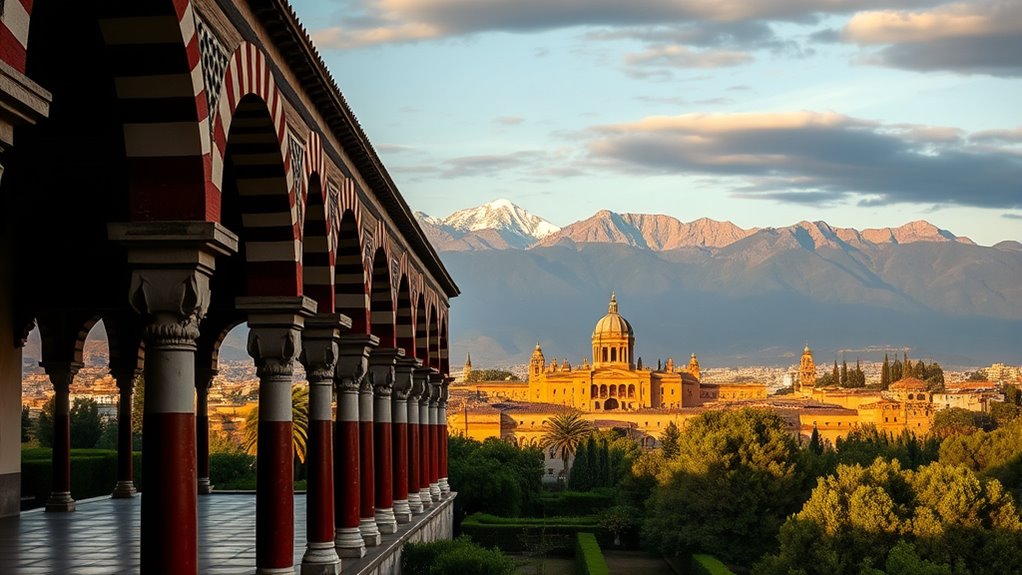
As you step into the vibrant world of Islamic Spain, you’ll discover a rich tapestry of architectural wonders that reflect centuries of cultural exchange and innovation. The intricate beauty of Moorish design and the stunning expressions of Islamic art immediately capture your senses. You’ll find that each structure tells a story, blending influences from various cultures and showcasing the remarkable skills of artisans who shaped this unique landscape.
One of the most iconic examples is the Great Mosque of Córdoba, known as the Mezquita. As you walk through its mesmerizing arches and columns, you can’t help but feel the weight of history. The red and white striped arches, a hallmark of Moorish design, create a rhythmic pattern that draws your eyes upward. You’ll be amazed by the skillful interplay of light and shadow, which brings the space to life. The mosque’s mihrab, adorned with intricate mosaics, is a masterpiece of Islamic art, reflecting the spiritual devotion of those who worshipped here.
Then there’s the Alhambra in Granada, a stunning fortress and palace that encapsulates the essence of Islamic architecture. As you meander through its lush gardens and elegant courtyards, you’ll encounter delicate stucco work and elaborate tile mosaics, each a tribute to the artistic prowess of its creators. The intricate arabesques and geometric patterns invite you to ponder their meaning, revealing the deep philosophical concepts embedded in Islamic art. You’ll find yourself captivated by the flowing water features that enhance the tranquility of the surroundings, creating a serene atmosphere that feels almost otherworldly.
As you explore these architectural gems, you’ll also notice the fusion of cultures that took place during the period of Al-Andalus. The influence of Christian, Jewish, and Islamic aesthetics can be seen in various details, such as the ornate wooden ceilings and vibrant ceramic tiles. This rich blend reflects a time when collaboration and mutual respect thrived, making these sites not just architectural wonders but also symbols of unity and diversity.
In every corner of Islamic Spain, the remnants of Moorish design and Islamic art serve as a reminder of a vibrant past. You’ll leave with a deeper appreciation for the creativity and ingenuity that shaped these landmarks, each one an invitation to explore the beauty of a shared heritage.

Architecture of the Islamic West: North Africa and the Iberian Peninsula, 700–1800
As an affiliate, we earn on qualifying purchases.
As an affiliate, we earn on qualifying purchases.
Frequently Asked Questions
What Materials Were Commonly Used in Islamic Architecture?
In Islamic architecture, you’ll often find materials like decorative tiles and intricate stonework. These vibrant tiles add color and artistry to surfaces, while calligraphic inscriptions enhance the spiritual atmosphere of structures. You might also see wood and plaster used for intricate carvings and ceilings, contributing to the overall aesthetic. The combination of these materials creates a sense of harmony and beauty, reflecting the rich cultural heritage of the period.
How Did Islamic Architecture Influence Modern Design?
Islamic architecture’s influence on modern design is evident in the use of geometric patterns and horseshoe arches. You’ll notice these elements in contemporary buildings, where they create visually striking spaces. Architects often draw inspiration from the intricate designs of the past, integrating them into modern aesthetics. By incorporating these features, you can achieve a balance between tradition and innovation, making your designs not only functional but also rich in cultural heritage.
What Is the Historical Significance of the Mosque-Cathedral of Cordoba?
The Mosque-Cathedral of Cordoba, with its stunning 856 columns, represents a pinnacle of cultural exchange and architectural innovation. It showcases the blend of Islamic and Christian influences, reflecting Spain’s diverse history. This site not only served as a place of worship but also as a symbol of tolerance and coexistence. You’ll appreciate how its intricate designs and grand scale inspired future generations, making it a essential piece of architectural heritage in the world.
Are There Guided Tours Available for These Architectural Sites?
Yes, there are guided tours available for these architectural sites. You can easily find visitor information online or at local tourist centers. These tours often offer insights into the rich history and intricate designs of the structures, enhancing your experience. You’ll appreciate the beauty and significance of each site even more with a knowledgeable guide. Don’t forget to check for any special events or timings that might affect your visit!
What Is the Best Time to Visit Alhambra?
The best time to visit Alhambra is during the spring or fall when the weather’s mild and the crowds are smaller. Are you ready to explore its beauty without feeling rushed? For the best visiting hours, aim for early morning or late afternoon, as these times offer stunning light for photos. Keep seasonal considerations in mind, as summer can be hot and crowded, making your experience less enjoyable. Plan wisely, and you’ll love it!
Cordoba Great Mosque model replica
As an affiliate, we earn on qualifying purchases.
As an affiliate, we earn on qualifying purchases.
Conclusion
In exploring the architectural wonders of Islamic Spain, you’ve wandered through history, much like Don Quixote on his quest for chivalry. From the intricate designs of Córdoba’s mosque to the enchanting Alhambra, each site whispers stories of a glorious past. These masterpieces remind you that beauty and culture are timeless, transcending boundaries. So, take these memories with you, and let them inspire your own adventures, just as they’ve inspired countless souls throughout the ages.

WitnyStore Tiny 2⅝" Alhambra Palace Granada Spain Magnet – Miniature Hand Made Resin 3D Europe Landmark Tourist Attractions Decorative Refrigerator Fridge Magnets Collectible Traveler Souvenirs Gifts
SIZE: Measuring approximately Alhambra Palace in Granada Spain 2⅝" Wide x 2⅜" High x ¾" Thick, this cute…
As an affiliate, we earn on qualifying purchases.
As an affiliate, we earn on qualifying purchases.

Biladona Ottoman Mosque 500 Piece Jigsaw Puzzle – Turkish Architecture with Colorful Lanterns Art – Adult Puzzle Gift for Travel Lovers
VIBRANT OTTOMAN ARTWORK – Features stunning impressionistic art of an iconic Ottoman mosque with golden domes and minarets,…
As an affiliate, we earn on qualifying purchases.
As an affiliate, we earn on qualifying purchases.