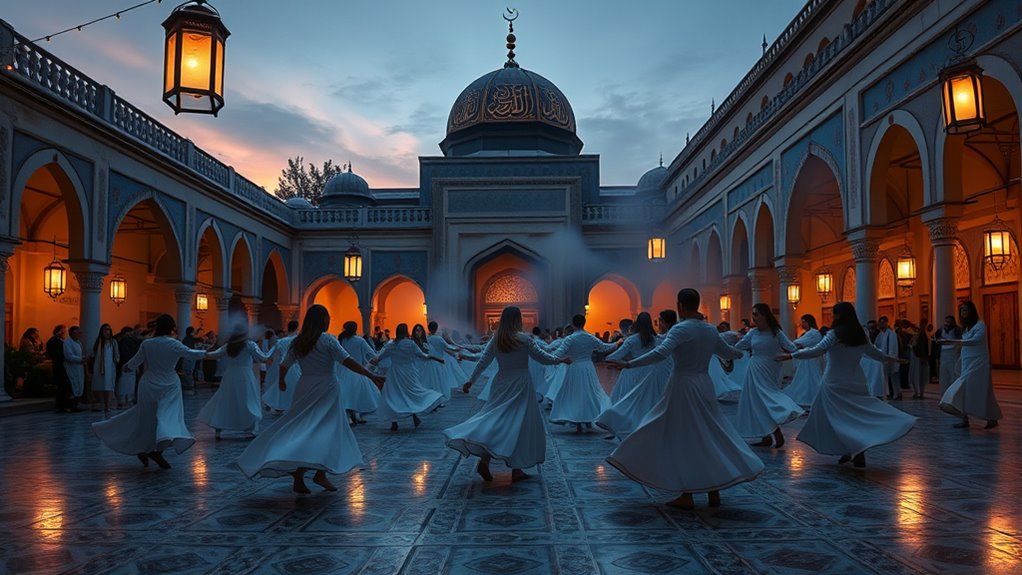

Sufism and spirituality are central to Islamic culture, encouraging you to seek a personal connection with the divine and emphasizing love and compassion. This mystical branch transcends rigid rituals, guiding you toward inner peace and emotional depth. Through practices like whirling dances and poetry from Rumi and Hafiz, you can experience a journey of self-discovery and enlightenment. There’s so much more to explore about how Sufism enriches spiritual life in Islam.
Key Takeaways
- Sufism emphasizes personal experience and inner connection to the divine, transcending traditional religious practices in Islamic culture.
- It fosters love, compassion, and emotional depth, promoting unity among individuals and with the world.
- Sufi poetry, notably by Rumi and Hafiz, explores universal themes, guiding spiritual reflection and enhancing understanding of faith.
- Rituals like the Mevlevi whirling dance symbolize the soul’s journey toward God, facilitating spiritual ecstasy and deeper connection.
- Sufism encourages personal growth and transformation through exploration, reflection, and a holistic approach to spirituality within Islam.

While many people might associate spirituality with organized religion, in Islamic culture, it transcends mere rituals and doctrines. You’ll find that Sufism, the mystical branch of Islam, plays a significant role in shaping how spirituality is perceived and practiced. Sufism invites you to explore a deeper connection with the divine, emphasizing personal experience over strict adherence to traditional laws. This path encourages you to seek inner peace and enlightenment, often through mystical practices that can transform your understanding of faith.
One of the most enthralling aspects of Sufism is its rich tradition of Sufi poetry. When you immerse yourself in the works of poets like Rumi and Hafiz, you discover that their verses resonate with universal themes of love, longing, and the quest for unity with the divine. Their words invite you to reflect on your spiritual journey, offering insights that can guide you toward a more profound understanding of yourself and your relationship with God. The beauty of Sufi poetry lies not just in its lyrical quality but in its power to evoke emotion and inspire contemplation.
Sufi poetry invites deep reflection on love and unity with the divine, guiding your spiritual journey toward profound self-understanding.
As you explore these mystical practices, you might find yourself drawn to the ritualistic aspect of Sufism, such as the whirling dance performed by the Mevlevi order. This practice symbolizes the soul’s journey toward God, allowing you to experience a state of spiritual ecstasy. Engaging in such practices can help you transcend the mundane, providing you with a tangible connection to the divine. You might even realize that these rituals serve as a form of meditation, helping you achieve a deeper sense of awareness and presence in your everyday life.
The essence of Sufism is about love and compassion. It encourages you to extend kindness to all beings, fostering a sense of unity with the world around you. By embracing this philosophy, you can cultivate a more profound sense of spirituality that transcends boundaries and connects you to the broader human experience. In this context, Sufism represents a unique form of spirituality that emphasizes mystical practices and personal connection to the divine.
In this light, Sufism becomes more than just a religious path; it’s a way of life that emphasizes personal growth, emotional richness, and spiritual depth. As you explore the world of Sufism, you’ll find that it offers endless opportunities for exploration, reflection, and transformation, inviting you to uncover layers of meaning within your own spiritual journey.

The Spiritual Poems by Rumi: A Fine Collection of Soulful Poetry from Rumi to Nourish Your Heart: An Authentic Translation// A Spiritual Gift for … by Rumi, Hafiz, and Other Persian Poets)
As an affiliate, we earn on qualifying purchases.
As an affiliate, we earn on qualifying purchases.
Frequently Asked Questions
What Distinguishes Sufism From Other Islamic Practices?
What distinguishes Sufism from other Islamic practices is its focus on mystical experiences and inner purification. You’ll find that Sufis emphasize personal connections to the divine, often through meditation, music, and poetry. Unlike more traditional practices, Sufism encourages you to seek a deeper understanding of faith, transcending mere rituals. This journey toward spiritual enlightenment fosters a profound sense of love and unity with God, setting Sufism apart in the Islamic landscape.
How Do Sufi Rituals Differ Across Cultures?
Sufi rituals can feel like a vibrant tapestry, each thread representing a different culture’s unique flavor. While the core practices—like dhikr (remembrance of God)—remain, regional variations add depth. For instance, in Turkey, you’ll find the mesmerizing whirling dervishes, while in India, you might experience qawwali music‘s soul-stirring energy. These cultural rituals reflect the diverse expressions of love and devotion, showcasing how Sufism adapts beautifully to its surroundings while maintaining its spiritual essence.
Can Sufism Be Practiced Outside of Islam?
Yes, you can practice Sufism outside of Islam. Many people engage with Sufi principles, focusing on love, compassion, and inner peace, through interfaith dialogue and secular adaptation. These practices allow you to explore Sufi concepts without adhering strictly to Islamic traditions. By embracing the spiritual essence of Sufism, you can cultivate a deeper understanding of yourself and others, fostering connections that transcend religious boundaries while appreciating the wisdom Sufism offers.
What Role Does Music Play in Sufi Traditions?
In Sufi traditions, music’s like a gentle breeze that lifts your spirit. It plays an essential role, serving as a vehicle for spiritual connection. Through musical meditation, you find tranquility, while rhythmic chanting resonates within your heart, helping you transcend the ordinary. As you immerse yourself in these melodies, you awaken a deeper awareness, allowing the divine presence to flow through you, guiding your journey toward inner peace and enlightenment.
How Can One Start Exploring Sufi Spirituality?
To start exploring Sufi spirituality, immerse yourself in Sufi meditation practices. These meditative techniques help you connect deeply with your inner self and the divine. Reading spiritual poetry from Sufi masters like Rumi and Hafiz can inspire your journey, offering profound insights into love and existence. Attend local Sufi gatherings or workshops to engage with the community, share experiences, and learn from others. Embrace this path with an open heart and mind.

Body Groove Delicious Dance DVD Collection
As an affiliate, we earn on qualifying purchases.
As an affiliate, we earn on qualifying purchases.
Conclusion
In the tapestry of Islamic culture, Sufism weaves a vibrant thread of spirituality that connects hearts and souls. When you immerse yourself in this mystical domain, you discover that spirituality isn’t just a practice; it’s a journey of the heart. Embracing Sufism opens doors to deeper understanding and compassion, reminding us that in the vast universe of faith, love and connection are the true guiding stars. So, let your spirit soar and explore this rich heritage!

Copper Hand Held Prayer Wheel with Tibetan Buddhist Six-Character Truth Premium Buddha Scriptures, Wooden Handle Prayer Wheel for Praying, blessing, Meditation, Healing, Relaxing, Yoga
Size and Packed: 1Pcs Prayer Wheel with Six-Character Truth; Overall length: 7 inches; Prayer wheel width: 2.36in; No…
As an affiliate, we earn on qualifying purchases.
As an affiliate, we earn on qualifying purchases.

Middle East – The Wellness Seeker: Islamic Medicine and Mysticism: Mesopotamian Healers and Sufi Meditation Practices
As an affiliate, we earn on qualifying purchases.
As an affiliate, we earn on qualifying purchases.