To guarantee your meat and poultry are halal, seek products with certification labels from recognized halal authorities. This guarantees adherence to strict animal welfare standards and proper slaughter methods. Start by researching suppliers and retailers to confirm their compliance. Look for evidence of humane treatment throughout the supply chain, from farms to processing. Choosing halal not only aligns with your ethical values but also supports dignified practices in the food industry. Keep going to discover even more about this important process.
Key Takeaways
- Research recognized halal certifying authorities to understand their specific requirements and standards for meat and poultry certification.
- Ensure that the supply chain, from farm to processing, adheres to halal guidelines, emphasizing animal welfare and ethical treatment.
- Verify that slaughter methods meet halal requirements by ensuring swift, painless techniques are used during the process.
- Obtain proper documentation and certification labels from suppliers to confirm compliance with halal and animal welfare standards.
- Regularly review and stay informed about updates in halal certification practices to maintain adherence to evolving standards and regulations.
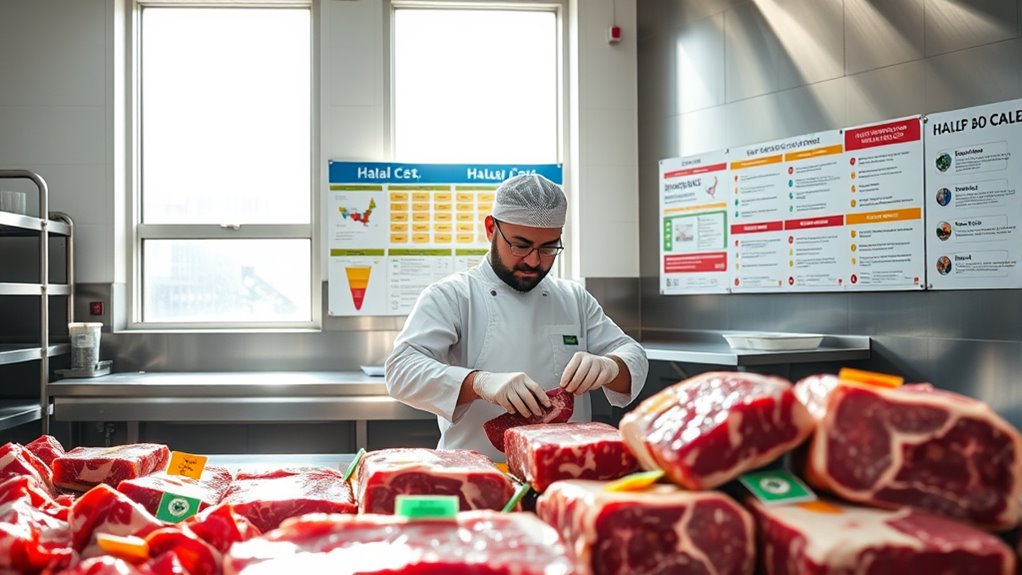
When you choose to buy halal meat and poultry, you’re not just making a dietary choice; you’re also supporting a process rooted in ethical and religious standards. This commitment to halal practices ensures that the animals are treated with respect and care throughout their lives, reflecting a strong emphasis on animal welfare. By opting for halal-certified products, you’re aligning your food choices with your values, promoting humane treatment, and adhering to guidelines that prioritize the well-being of animals.
Choosing halal meat supports ethical standards and prioritizes animal welfare, aligning your food choices with compassion and respect for life.
Halal certification involves a meticulous supply chain, starting from the farm where animals are raised to the processing facilities that prepare the meat for consumption. Every step in this supply chain is essential. Farmers who raise halal animals are often trained to follow specific guidelines that ensure the animals are fed a natural diet, have access to clean water, and are provided with appropriate living conditions. This attention to animal welfare not only enhances the quality of the meat but also fulfills a religious obligation.
When animals are treated well and slaughtered according to halal methods, it minimizes their stress and suffering. The process mandates that animals are slaughtered in a humane manner, emphasizing swift and painless methods. This approach not only adheres to religious requirements but also reflects a broader ethical standpoint regarding how we should treat living beings. By choosing halal meat, you’re advocating for these practices, which benefit both the animals and consumers who seek quality, responsibly sourced products.
Navigating the halal certification process may seem intimidating, but it’s straightforward if you know what to look for. Start by checking for certification labels from recognized halal authorities. These certifications indicate that the meat has met stringent standards for both animal welfare and processing. You can also research suppliers and retailers to ensure they comply with halal regulations, giving you confidence in your purchase.
When you select halal meat and poultry, you’re not only nourishing yourself and your family; you’re also consciously supporting ethical practices that resonate with your beliefs. This choice reverberates through the supply chain, encouraging farmers, processors, and retailers to uphold high standards of animal welfare. In a world where food choices profoundly impact our environment and society, embracing halal practices paves the way for a more compassionate approach to consumption. By making informed decisions, you contribute to a system that values life and promotes ethical responsibility in the food industry. Additionally, understanding the role of animal welfare in halal practices reinforces the importance of ethical sourcing and humane treatment of livestock.
Top picks for "step halal certification"
Open Amazon search results for this keyword.
As an affiliate, we earn on qualifying purchases.
Frequently Asked Questions
What Are the Main Differences Between Halal and Kosher Certification?
Halal and kosher certification differ mainly in their religious dietary laws and certification standards. Halal, from Islamic teachings, emphasizes certain slaughter methods and prohibits specific foods, while kosher, rooted in Jewish law, focuses on dietary restrictions and preparation techniques. For example, kosher requires separation of dairy and meat, which halal doesn’t. Additionally, halal certification can vary widely across different countries and organizations, while kosher tends to be more uniform in its requirements.
Can Non-Muslims Consume Halal-Certified Meat?
Yes, non-Muslims can consume halal-certified meat. In fact, a 2019 report indicated that the global halal market is expected to reach $2.6 trillion by 2025, reflecting its widespread acceptance. While halal adheres to Muslim dietary laws, it doesn’t exclude others. Halal versus kosher certifications have similarities, but halal meat can appeal to a broader audience, focusing on ethical sourcing and humane treatment, making it a choice for many, regardless of their faith.
How Does Halal Certification Affect the Meat’s Taste?
Halal certification doesn’t inherently change meat flavor, but it can impact how the meat is processed and handled. Since halal practices emphasize cleanliness and humane treatment, you might find that the quality of the meat is higher. This could enhance your overall experience, making the meat taste fresher and more flavorful. So, while the certification itself isn’t a direct flavor enhancer, the standards involved can lead to better-tasting meat.
Is Halal Certification Recognized Worldwide?
Yes, halal certification is recognized worldwide, but the acceptance of halal standards can vary by region. Many countries have specific certification processes that guarantee compliance with Islamic dietary laws. When you choose halal products, you’re often assured of their adherence to these standards, which can help you feel more confident in your choices. Just remember that the level of recognition may differ, so it’s essential to research local regulations and certifying bodies.
What Are the Costs Associated With Halal Certification?
Getting halal certification can feel like steering through a maze, but understanding the cost breakdown helps. You’ll need to take into account certification fees, which vary based on the certifying body and your operation’s size. Additional expenses might include training staff, modifying facilities, or sourcing compliant ingredients. Overall, budgeting for these costs will guarantee a smoother certification process, making it easier for you to meet halal standards and reach your market effectively.
Conclusion
In the journey toward halal certification, think of your meat and poultry as a bridge connecting cultures and values. By ensuring your products meet halal standards, you’re not just adhering to guidelines; you’re nurturing trust and respect within a diverse community. Each step you take symbolizes a commitment to quality and integrity, allowing you to serve as a beacon of compassion and understanding. Embrace this path, and you’ll cultivate a lasting bond with your customers.