Many people misunderstand halal, thinking it’s just about permissible food, but it actually covers lifestyle, conduct, and ethical standards, not just ingredients. For example, halal involves proper slaughter, humane treatment, and authentic certification—yet labels alone don’t guarantee compliance. It’s essential to know the difference between halal and tayyib, and that standards can vary across regions. To avoid confusion and make truly informed choices, uncover the facts behind these common misconceptions.
Key Takeaways
- Halal means permissible under Islamic law and covers food, conduct, and lifestyle, not just dietary restrictions.
- Proper halal certification ensures compliance with slaughter methods and ingredient standards, but labels alone aren’t sufficient.
- Halal focuses on permissible ingredients, while tayyib emphasizes wholesomeness and quality; both are important.
- Many confuse halal with being inherently healthy or clean; certification guarantees permissibility, not health benefits.
- Standards and certification processes vary regionally, so consumers should verify authentic, recognized halal certifications.
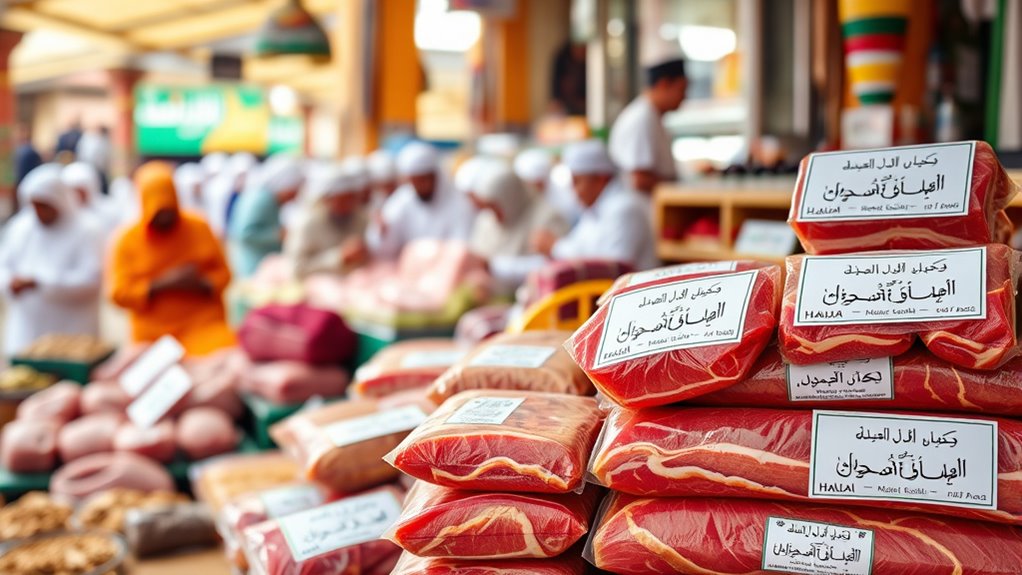
Have you ever wondered what “halal” really means? Many people hear the term and assume it simply refers to food that’s permissible under Islamic law. While that’s partly true, the concept of halal extends far beyond just what’s on your plate. It’s a thoroughgoing lifestyle guideline covering everything from food and beverages to personal conduct and business practices. But because the term is often used loosely or misunderstood, you might find yourself confused by its true meaning and the specific standards behind it.
At its core, halal means “permissible” in Arabic. When it comes to food, it indicates that the product complies with Islamic dietary laws. This includes not only what animals are eaten but also how they’re slaughtered, ensuring the process is humane and performed with a specific intention. However, many people mistakenly believe that if a product is labeled “halal,” it’s automatically free of all forbidden ingredients. That’s not always the case. For example, some products labeled halal may still contain additives or cross-contaminants that don’t meet strict Islamic standards. It’s essential to check for authentic certification from recognized authorities rather than relying solely on packaging claims.
Halal means permissible but check certifications to ensure compliance with Islamic standards.
Another common misconception is equating halal with “clean” or “healthy.” While halal does emphasize certain ethical and hygienic standards, it doesn’t necessarily mean the product is healthier or free from harmful substances. Halal certification focuses on permissible ingredients and proper slaughter methods, not nutritional content or health claims. So, don’t assume that a halal snack or meal is automatically better for you than its non-halal counterpart. It’s always wise to read labels carefully and consider the overall quality of the product.
People also sometimes confuse “halal” with “tayyib,” which means wholesome or pure. While the two concepts are related and often go hand in hand, they aren’t interchangeable. Halal is about what’s permitted, whereas tayyib emphasizes purity, safety, and goodness. A product can be halal but not necessarily tayyib if it contains questionable or harmful ingredients. Understanding this distinction helps you make more informed choices that align with your values and health.
Additionally, some individuals mistakenly believe that halal standards are uniform across all regions, but in reality, certification processes and standards can vary significantly by country and certifying body. Recognizing these differences can help consumers make more informed decisions and avoid unintentional non-compliance.
Understanding this distinction helps you make more informed choices that align with your values and health. Recognizing the differences between halal, tayyib, and haram enables you to navigate dietary and lifestyle decisions with greater clarity and confidence.

1.5 inch 300PCS Halal Food Label Circle Label Halal Identification Stickers
Scuff and scratch resistant. Labels have a gloss finish.
As an affiliate, we earn on qualifying purchases.
As an affiliate, we earn on qualifying purchases.
Frequently Asked Questions
Can Non-Muslims Eat Halal-Certified Food?
Yes, non-Muslims can eat halal-certified food if they choose to do so. Halal certification guarantees the food meets specific Islamic guidelines, but it doesn’t restrict consumption to Muslims only. Many people, regardless of their faith, prefer halal for its ethical standards and quality. So, if you find halal food appealing or suitable for your dietary needs, feel free to enjoy it without concern.
Is Gelatin Always Considered Non-Halal?
Gelatin isn’t always non-halal; it depends on its source. If derived from pork or non-halal animals, it’s considered haram. But if made from halal-slaughtered animals or plant-based sources, it’s permissible. You should always check the label or ask about the source, especially when eating processed foods. This way, you guarantee your diet aligns with halal guidelines, avoiding accidental consumption of forbidden ingredients.
What’s the Difference Between Halal and Tayyib?
Halal refers to what’s permissible under Islamic law, covering food, drinks, and actions. Tayyib emphasizes the quality and purity of what’s halal—it’s about wholesome, clean, and good. While all tayyib items are halal, not all halal items are necessarily tayyib if they lack purity or good quality. You should look for both to ensure what you consume is not just permitted but also pure and wholesome.
Are All Vegetarian Products Automatically Halal?
Did you know that approximately 20% of global consumers prefer vegetarian options? Not all vegetarian products are automatically halal. While they don’t contain pork or alcohol, they must be free from cross-contamination with non-halal ingredients and processed in halal-certified facilities. Always check labels for halal certification or ingredient lists, especially if you’re strict about adhering to halal standards. Don’t assume vegetarian means automatically halal—verify to be completely sure.
How Do I Verify Halal Authenticity Abroad?
To verify halal authenticity abroad, you should look for reputable certification logos on packaging or establishments. Always research local halal certifying bodies and check their credentials online. Ask staff about their halal sources and practices. Use trusted apps or websites that list certified halal places. Remember, when in doubt, seek recommendations from fellow travelers or local Muslim communities to guarantee you’re consuming genuinely halal products.
Halal slaughter certification
As an affiliate, we earn on qualifying purchases.
As an affiliate, we earn on qualifying purchases.
Conclusion
Think of halal terms like a map guiding you through unfamiliar territory. With the right understanding, you’ll avoid the confusing pitfalls and navigate confidently. Just as a seasoned traveler knows which paths lead to safe and enjoyable destinations, knowing these terms ensures your journey remains smooth and true to your values. Embrace this knowledge, and you’ll always find your way, turning potential misunderstandings into stepping stones for a richer, more confident faith walk.
Halal food ingredients checker
As an affiliate, we earn on qualifying purchases.
As an affiliate, we earn on qualifying purchases.
Halal and Tayyib certified products
As an affiliate, we earn on qualifying purchases.
As an affiliate, we earn on qualifying purchases.