Halal Fashion Weeks are vibrant global events that celebrate creativity while respecting Islamic values. You’ll find designers showcasing innovative styles that blend modern aesthetics with rich cultural heritage. Sustainability is a key focus, with eco-friendly fabrics becoming increasingly popular. These events foster community and inclusivity, allowing everyone to appreciate modest fashion. As you explore further, you’ll discover more about how these platforms are shaping the future of the fashion industry and promoting ethical practices.
Key Takeaways
- Halal Fashion Weeks are global platforms celebrating creativity while adhering to Islamic principles and promoting modest fashion.
- Designers are increasingly using sustainable fabrics, appealing to environmentally conscious consumers and aligning with ethical fashion practices.
- The events showcase rich cultural heritage, blending traditional attire with modern designs, and fostering innovative styles through cultural exchange.
- Halal Fashion Weeks emphasize inclusivity, welcoming all who appreciate modest fashion and building community among designers and attendees.
- These events spark dialogue on sustainability and cultural heritage, influencing future trends in mindful and stylish dressing within the fashion industry.
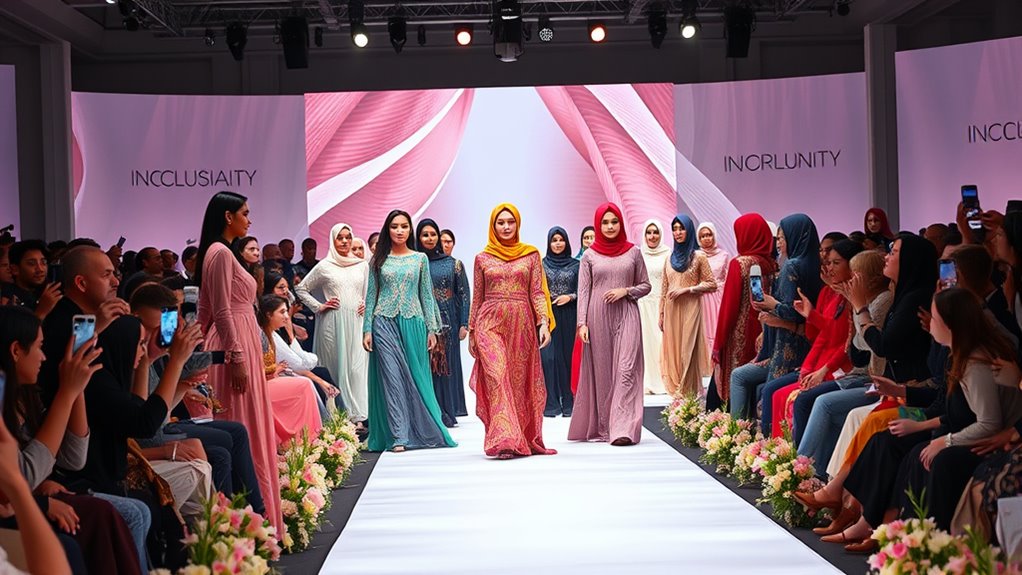
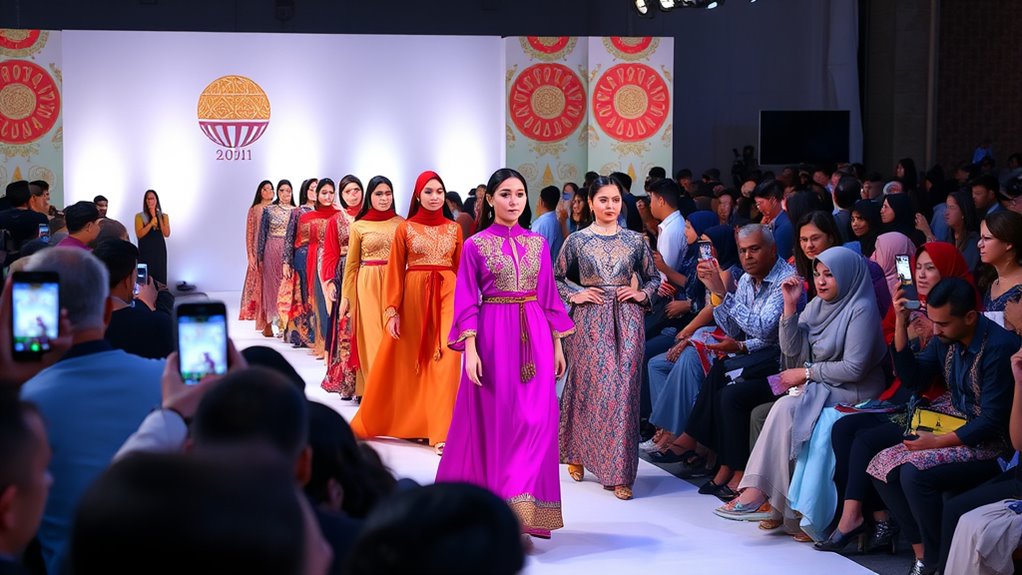
Have you noticed the rise of Halal fashion weeks around the globe? These events are becoming a vibrant platform for designers, showcasing their creativity while respecting Islamic principles. As you explore these fashion weeks, you’ll see how they blend modern aesthetics with cultural influences, creating a unique space in the fashion industry. It’s not just about modesty; it’s a celebration of diversity, style, and sustainability.
The rise of Halal fashion weeks celebrates creativity, diversity, and sustainability, blending modern aesthetics with cultural influences.
Designers are increasingly embracing sustainable fabrics, recognizing the growing demand for eco-friendly options. You’ll find collections made from organic cotton, bamboo, and recycled materials, which not only appeal to environmentally conscious consumers but also align with the values of many in the Muslim community. By choosing sustainable fabrics, designers are making a statement that fashion can be both stylish and responsible. You can appreciate how these choices reflect a broader awareness of our impact on the planet, encouraging a shift towards more ethical practices in fashion.
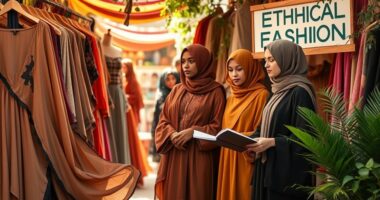
Cultural influences play a significant role in Halal fashion weeks. Each event showcases the rich heritage of different regions, allowing you to witness how traditional attire inspires modern designs. From intricate embroidery to bold patterns, these collections tell stories that resonate with both local and global audiences. You’ll find that many designers incorporate elements from their cultural backgrounds, creating a fusion of styles that appeals to a diverse clientele. This cultural exchange enriches the fashion landscape, offering something innovative and fresh for everyone.
Moreover, as you attend these fashion weeks, you’ll notice the emphasis on inclusivity. Halal fashion isn’t limited to a specific demographic; it welcomes everyone who appreciates modest fashion. This openness fosters a sense of community among designers, influencers, and attendees, allowing you to connect with others who share similar values. It’s inspiring to see how the industry is evolving, breaking down barriers and encouraging acceptance of diverse expressions of identity. Emotional intelligence is key to nurturing these connections and fostering a supportive environment.
As the Halal fashion movement continues to grow, it’s clear that these events are more than just showcases for clothing. They’re platforms for dialogue about cultural heritage, sustainability, and the future of fashion. So, as you keep an eye on the latest trends, you’ll also find yourself part of a larger conversation about what it means to dress mindfully and stylishly in today’s world. The rise of Halal fashion weeks is just the beginning of a beautiful journey in the fashion industry.
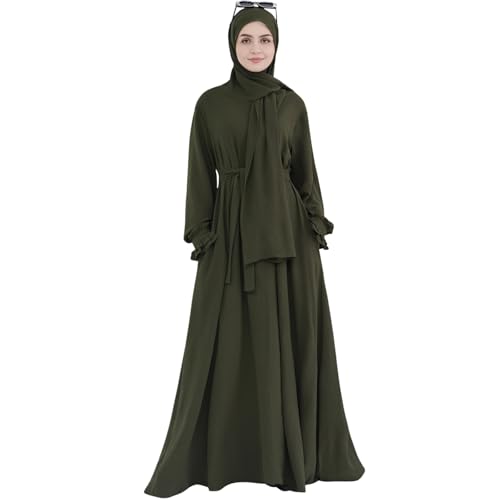
Khalat Women's Army Green Maxi Abaya Dress with Hijab Scarf, Lace Sleeve, Flowy, One Size, Solid, Daily, Versatile, All Seasons
[Material] This Muslim abaya dress for women is made of upgraded polyester fabric. Soft and breathable, skin-friendly and…
As an affiliate, we earn on qualifying purchases.
As an affiliate, we earn on qualifying purchases.
Frequently Asked Questions
What Is the History of Halal Fashion?
Halal fashion traces its roots back to the early 20th century, influenced by cultural shifts and the need for modest clothing. You’ll notice how textile innovations played a key role in creating stylish yet modest garments. As societies evolved, designers began merging traditional values with contemporary trends, ensuring that fashion aligns with Islamic principles. This blend of cultural influences and modern materials continues to shape the halal fashion landscape today.
How Do Designers Ensure Their Collections Are Halal?
Designers guarantee their collections are halal by carefully considering cultural influences and fabric choices. They select materials that comply with Islamic guidelines, avoiding anything derived from prohibited sources. You’ll notice them often opting for natural fabrics like cotton or linen. Additionally, they pay attention to modesty in design, ensuring garments are stylish yet respectful. By blending traditional elements with modern aesthetics, designers create collections that resonate with their audience while meeting halal criteria.
Are There Specific Guidelines for Halal Fashion Shows?
Yes, there are specific guidelines for halal fashion shows. In fact, the global halal market is projected to reach $3 trillion by 2024, showcasing its growth. Designers guarantee cultural representation by adhering to modesty standards while emphasizing ethical sourcing in their materials. You’ll notice that these guidelines encourage creativity and respect for diverse cultures, allowing designers to celebrate their heritage while meeting the values of halal principles in their collections.
How Can I Participate in a Halal Fashion Week Event?
To participate in a halal fashion week event, start by researching upcoming shows and their application processes. Focus on creating designs that highlight sustainable fabrics and modest styling. Network with other designers and influencers in the halal fashion community to gain insights and support. Attend workshops or events related to halal fashion to improve your skills and understanding. Don’t forget to showcase your unique perspective and creativity to stand out in the crowd!
What Are the Main Markets for Halal Fashion Worldwide?
The halal fashion market’s expected to reach $361 billion by 2023, highlighting its growing significance. You’ll find main markets in Asia, particularly Indonesia and Malaysia, where luxury branding and ethical sourcing are highly valued. The Middle East, especially the UAE, is also booming, emphasizing modesty and style. By tapping into these regions, you can explore unique opportunities and connect with consumers who prioritize ethical and luxurious fashion choices.

SimpleFun Floral Shirts for Women Short Sleeve Ruffle Mock Neck Summer Tops Modest Green M
Material: This floral top is soft,comfortable and airy, ensuring an extraordinary feeling against the skin, and lightweight enough…
As an affiliate, we earn on qualifying purchases.
As an affiliate, we earn on qualifying purchases.
Conclusion
Halal fashion weeks are transforming the industry, showcasing diversity and inclusivity in style. Did you know that the global halal market is expected to exceed $4 trillion by 2024? This booming interest highlights the demand for modest, stylish clothing that respects cultural values. As more designers participate in these events, you’re witnessing a vibrant fusion of tradition and modernity that resonates with people worldwide. Embrace this exciting evolution and see how it shapes the future of fashion!

Fashion Chiffon Hijab Scarf for Women – Lightweight & Breathable Muslim Headscarf (180x70cm) Sun Protection Hijab – Elegant Wrap for Daily Wear (Khaki)
Soft Chiffon for All-Day Comfort: Our hijab is crafted from lightweight satin chiffon, offering a silky-soft touch that…
As an affiliate, we earn on qualifying purchases.
As an affiliate, we earn on qualifying purchases.

Aisha's Design Maharajah Instant Turban Hijab for Women Headwrap Lightweight Headscarf Modest Headwear, Plain Stylish Bonnet Cap for Women, Navy Blue
Introducing the 'Maharajah Instant Turban Hijab' – a regal touch to the modern woman's wardrobe that blends the…
As an affiliate, we earn on qualifying purchases.
As an affiliate, we earn on qualifying purchases.