

Eco-friendly halal tourism combines your travel aspirations with eco-conscious choices. You can choose sustainable accommodations that prioritize green practices, enjoy local halal dining to support regional economies, and opt for green transportation methods like biking or public transit. This approach not only minimizes your ecological footprint but also enriches your travel experience with meaningful cultural interactions. There’s so much more to discover about how to make responsible travel choices that align with your values.
Key Takeaways
- Eco-friendly halal tourism blends environmental care with travel principles, promoting sustainable experiences that align with personal values.
- Choose accommodations with green certifications that implement renewable energy and water conservation practices.
- Utilize green transportation options like public transit, biking, and walking to minimize carbon footprints while exploring destinations.
- Dine at halal-certified restaurants that source local and organic ingredients to support regional economies and reduce emissions.
- Embrace responsible travel behaviors that contribute to a greener planet and enhance personal well-being through health-conscious choices.
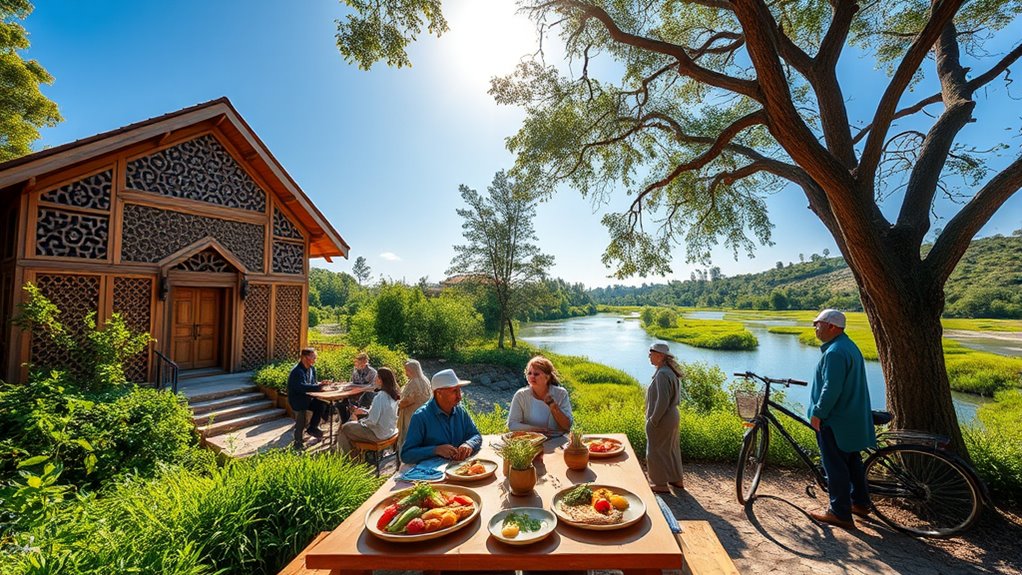
As the world becomes more conscious of environmental issues, eco-friendly halal tourism is emerging as a sustainable travel option that respects both your beliefs and the planet. More travelers like you are seeking ways to explore new destinations while minimizing their ecological footprint. By choosing eco-friendly halal tourism, you can enjoy your journey without compromising your values or the environment.
One of the best ways to guarantee you’re making sustainable choices is by selecting sustainable accommodations. Many hotels and lodges are now embracing eco-friendly practices, from utilizing renewable energy sources to implementing water conservation measures. When you book your stay, look for accommodations that have green certifications or are committed to sustainable practices. This means you’ll not only support businesses that care for the environment but also enjoy a unique experience that aligns with your lifestyle. Imagine sleeping in a cozy eco-lodge that uses solar power and sources its food from local, organic farms. It’s a win-win situation where you get to enjoy a great stay while contributing to sustainable tourism.
Choose sustainable accommodations to enjoy a unique stay while supporting eco-friendly practices and contributing to a greener planet.
Next, consider how you’ll get around during your trip. Opting for green transportation is vital for reducing your carbon footprint. Public transport, biking, or walking are fantastic ways to explore your destination while keeping your impact low. Many cities are enhancing their public transport systems with electric buses and trams, making it easier than ever to travel sustainably. If you’re venturing into nature, try to find eco-friendly tour operators that prioritize the environment. They often use electric vehicles or encourage carpooling, so you’ll know you’re doing your part to protect the planet.
Also, don’t forget about the food! Eating at halal-certified restaurants that source local ingredients can greatly enhance your experience. Not only can you indulge in delicious dishes that meet your dietary needs, but you’ll also be supporting local farmers and reducing the carbon emissions associated with transporting food long distances. Additionally, choosing organic and locally sourced ingredients can provide added health benefits, such as supporting overall cellular health.
Frequently Asked Questions
What Are the Benefits of Eco-Friendly Halal Tourism for Local Communities?
Eco-friendly halal tourism benefits local communities by fostering community empowerment and cultural preservation. You’ll see how sustainable practices can enhance local economies, create jobs, and support small businesses. By engaging with authentic cultural experiences, you help maintain traditions and promote local heritage. Plus, your choices encourage environmentally responsible behaviors, ensuring that natural resources remain intact for future generations. Ultimately, you contribute to a thriving community that values both its culture and environment.
How Can Travellers Ensure Their Accommodations Are Truly Eco-Friendly?
To guarantee your accommodations are truly eco-friendly, check for eco certification programs and green building standards. Look for certifications like LEED or Green Key, which indicate a commitment to sustainability. Don’t hesitate to ask hotel staff about their environmental practices, such as energy efficiency or waste management. Reading reviews can also help; guests often mention eco-friendly efforts. By doing a little research, you can make informed choices that align with your values.
Are There Specific Certifications for Eco-Friendly Halal Travel Providers?
Yes, there are specific eco certifications for halal travel providers. When you’re booking your trip, look for accommodations and services that have recognized eco certifications, which indicate their commitment to sustainability. Additionally, verify they meet halal standards, confirming they adhere to Islamic principles. This way, you can enjoy a travel experience that respects both your beliefs and the environment, making your trip more fulfilling and responsible.
What Role Do Local Cuisines Play in Eco-Friendly Halal Tourism?
Local cuisines play a vital role in eco-friendly halal tourism, enhancing culinary authenticity while promoting cultural preservation. When you savor traditional dishes, you connect with the region’s heritage and support local farmers and artisans. Imagine biting into a flavorful meal crafted from fresh, sustainable ingredients sourced nearby—each taste tells a story. By choosing to indulge in these local flavors, you not only enrich your travel experience but also contribute to the community’s economic well-being.
How Can Travellers Offset Their Carbon Footprint While on Halal Trips?
You can offset your carbon footprint while on halal trips by participating in carbon offset programs. Look for travel companies that offer these options, allowing you to contribute to reforestation or renewable energy projects. Additionally, follow sustainable travel tips like using public transport, choosing eco-friendly accommodations, and minimizing waste. Every little effort counts, so consider your impact and make conscious choices that support both your journey and the environment.
Conclusion
So, if you’re looking to save the planet while munching on your halal kebabs, eco-friendly halal tourism is calling your name! Forget about those carbon-heavy vacations—who needs a beach when you can hug a tree and sip organic chai? You can bask in the glow of your sustainable choices and still enjoy that guilt-free trip. After all, nothing says “I care” quite like a solar-powered prayer mat and a vegan shawarma. Happy eco-traveling!